
Skincare for Dark Skin: The Complete Guide
Dark skin is extraordinary. Melanin-rich, naturally resilient, capable of a depth and luminosity that other skin tones simply cannot replicate. And yet for most of the history of the modern skincare industry, dark skin was an afterthought, dermatology textbooks barely mentioned it, product formulations ignored it, and ‘universal’ skincare advice was designed almost entirely around lighter skin tones.
That is changing. Slowly, but genuinely. And in the meantime, this guide provides the information you need to care for your skin with intelligence and intention.
This is your complete skincare reference, from understanding what makes dark skin unique to building a routine that actually works to troubleshooting the specific concerns that Black women most commonly face.
Understanding Black Skin: What Makes It Different
Before you can build an effective skincare routine, you need to understand what you are working with. Black skin shares all the same structures as any other skin, epidermis, dermis, subcutaneous layer, sebaceous glands, but melanin content creates meaningful differences in how it behaves, what it is vulnerable to, and what it needs.
Melanin: Strength and Vulnerability
Melanin is produced by melanocytes and comes in two forms: eumelanin (responsible for brown and black tones) and pheomelanin (responsible for red and yellow tones). Black skin has a higher density of melanocytes that produce more eumelanin, which is what creates the depth of colour and the natural UV protection.
However, higher melanin density also means that melanocytes are more reactive. Any form of inflammation, acne, a scratch, an allergic reaction, or even aggressive exfoliation can trigger excess melanin production, resulting in the dark marks known as post-inflammatory hyperpigmentation (PIH). This is one of the most common and most frustrating skincare challenges for Black women.
→ Read: Black Skin Type: How to Determine It
→ Read: All You Need to Know About Black Skin
Hyperpigmentation: The Number One Concern
Post-inflammatory hyperpigmentation affects a disproportionate number of Black women and can be more persistent and pronounced than in lighter skin tones. The key to managing it is a three-pronged approach: prevent inflammation where possible, treat existing marks with proven brightening ingredients, and protect the skin from UV exposure (which always worsens hyperpigmentation).
Effective brightening ingredients for dark skin include: Vitamin C (L-ascorbic acid for brightening, stabilised forms for daily use), Niacinamide (reduces melanin transfer between cells), Alpha Arbutin (inhibits tyrosinase, the enzyme that produces melanin), Kojic Acid (derived from fungi, effective but can irritate sensitive skin), and AHAs such as glycolic or lactic acid used 2-3 times per week. Consistency over 8-12 weeks is essential; these are not overnight solutions.
Sun Protection for Black Skin: Non-Negotiable
Let us be clear about something: the myth that Black skin does not need sun protection is not just wrong, it is dangerous. Melanin does provide some natural protection, equivalent to roughly SPF 13 at most. It is not sufficient to protect against UV-induced damage, skin cancer, or, critically for Black women, hyperpigmentation, which is always worsened by unprotected sun exposure.
The historical barrier has been the white cast that most mineral sunscreens leave on dark skin. The good news is that the sunscreen market has transformed in recent years, and finding effective, invisible sun protection for dark skin is now genuinely possible.
What to look for: chemical sunscreens (avobenzone, octisalate, octocrylene) absorb UV rather than reflecting it, leaving no white cast. Mineral sunscreens (zinc oxide, titanium dioxide) with iron oxide added provide broad-spectrum protection and natural-looking coverage on dark skin. SPF 30 minimum for daily use. SPF 50 for outdoor activities.
Building a Skincare Routine for Black Skin
A good skincare routine does not need to be complicated. The essential steps are consistent, appropriate cleansing, targeted treatment, moisturising, and daily sun protection. Everything else is an optional enhancement.
Morning Routine
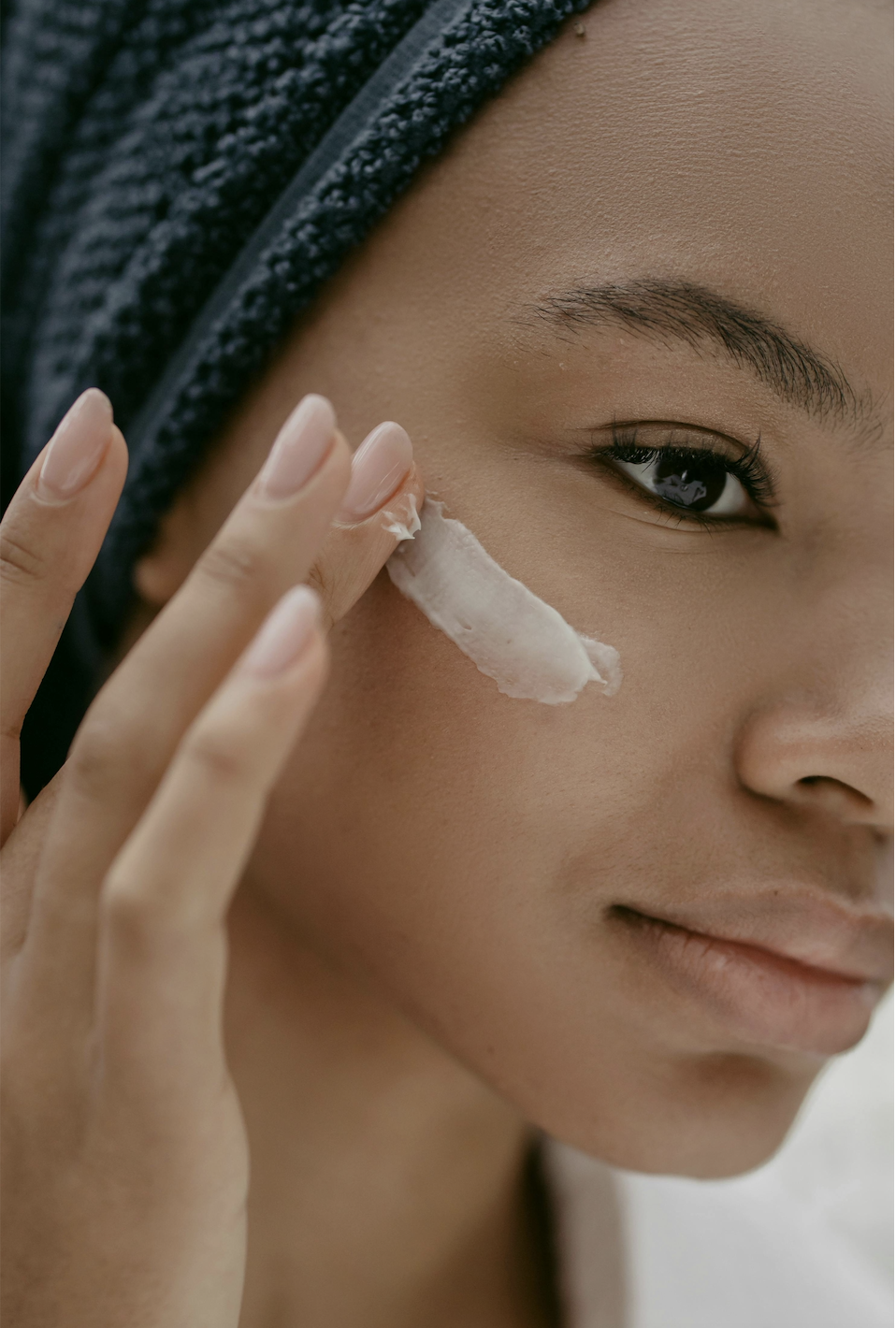
Gentle cleanser (avoid stripping formulas) → Vitamin C serum (brightening, antioxidant protection) → Niacinamide (for even tone) → Moisturiser appropriate to your skin type → SPF 30-50. This is your non-negotiable morning stack.
Evening Routine
Double cleanse if you wear SPF or makeup → Treatment serum (retinol, AHA, or targeted hyperpigmentation treatment) → Richer moisturiser or facial oil. Never skip the evening routine — this is when your skin repairs itself, and the right products accelerate that process.
→ Read: Facial for Dark Skin: Cleanse, Prepare, Moisturise
Steaming and Exfoliation
Facial steaming opens pores and prepares skin for treatment — and it is one of the most accessible and effective additions to a Black skincare routine. Two to three minutes of steam, used correctly, improves product absorption and supports natural skin clarity.
→ Read: What Are the Benefits of Steaming Your Face?
Natural Ingredients: The Loofah and Beyond
Some of the most effective skincare tools for Black skin are the simplest. The natural loofah (from the luffa plant) is an outstanding, gentle exfoliator that helps manage the texture irregularities and buildup that can make dark skin appear dull. Shea butter, black seed oil, rosehip oil, and African black soap all have strong evidence for efficacy on dark skin.
→ Read: Luffa / Loofah Skincare Benefits for Dark Skin
Seasonal Skincare for Black Skin
Black skin does not need the same routine year-round. Summer and winter create genuinely different challenges, and adapting your approach seasonally is not optional; it is how you maintain healthy, glowing skin through every month.
Summer Skincare for Black Skin
Summer brings increased UV exposure, heat, humidity (or lack of it), and the particular challenges of holidays, sun, sea and chlorine. SPF is more important than ever. Lighter moisturisers prevent congestion. And if you are spending time in the sun, understanding what sunburn actually looks like on dark skin is essential knowledge.
Read: Summer Skincare Routine for Black Skin
Winter Skincare for Black Skin
Winter is when dark skin is most vulnerable to looking ashy, dull, and tight. Cold temperatures, indoor heating, and reduced humidity all strip moisture from the skin faster than it can be replenished. Switching to richer moisturisers, adding a facial oil step, and being consistent with gentle exfoliation to prevent buildup are the winter essentials.
→ Read: How to Take Care of Your Black Skin in Winter
The Best Skincare Products for Black Women
Finding products that actually work for dark skin requires knowing what to look for and having recommendations from sources that test on a range of melanin levels. We have done the research.
→ Read: Birch Water for Black Skin: Benefits and How to Use
The History of Skincare for Black Women
Long before Western dermatology caught up, Black women across Africa and the diaspora had developed sophisticated, effective skincare traditions. Shea butter from West Africa has been used for centuries as a moisturiser, protective barrier, and treatment for skin conditions. African black soap, originating in West Africa, has long been used for its gentle cleansing and antibacterial properties. Palm kernel oil, used across sub-Saharan Africa, is rich in lauric acid with proven antimicrobial properties.
These are not trends; they are ancient practices that science is only now beginning to fully validate. When you use them, you are connecting to a tradition of Black skincare knowledge that predates the modern beauty industry by millennia.