
History of African Fashion: A Complete Guide from Ancient Times to Today
When people talk about African fashion, they often imagine a single aesthetic defined by bold prints, vibrant colours, and flowing silhouettes. But African fashion is not one thing. It is the expression of over 3,000 distinct ethnic groups, 54 countries, and thousands of years of civilisation. It is one of the richest, most diverse, and most misunderstood fashion traditions in the world.
The history of African clothing stretches back to the very origins of human dress. Long before European contact, African societies had already developed highly sophisticated textile traditions through weaving, dyeing, beading, and embroidery. These techniques were not simply decorative. They carried deep cultural, spiritual, and social meaning.
Across the continent, clothing has always been a language. It communicates identity, status, beliefs, and belonging. Despite colonisation, the slave trade, and globalisation, African fashion has endured, adapted, and transformed. Today, it stands at the centre of global fashion innovation.
This article explores the full evolution of African fashion, from ancient clothing traditions to contemporary designers shaping the global stage.
What Is African Fashion? Defining a Continent’s Style Identity
African fashion is not a monolith. The continent spans five distinct geographic regions (North Africa, West Africa, East Africa, Central Africa, and Southern Africa) each with its own climate, history, materials, and aesthetic traditions. What they share is a deep relationship between clothing and identity.
Across African cultures, what you wear communicates who you are. Your garments signal your social status, your community, your marital status, your spiritual standing, and your political allegiances. Clothing is never merely decorative, it is a language.
Understanding this is essential to understanding why African fashion has endured, evolved, and ultimately captivated the world.
Ancient African Clothing: The Origins (Before the 15th Century)
What did ancient Africans wear?
The earliest evidence of clothing in Africa dates back over 100,000 years, making Africa not just the cradle of humanity, but the cradle of human dress. Archaeological findings in South Africa, Morocco, and Ethiopia reveal the use of ochre, shells, and beads, the earliest known forms of personal adornment.
In terms of garments, ancient Africans used what the land provided: animal skins, plant fibres, bark cloth, and raffia. The specific materials varied dramatically by region and climate. In the tropical rainforests of Central Africa, bark cloth – made by pounding the inner bark of fig trees – was one of the primary textile materials. In the Sahel and savanna regions, cotton grew naturally and was hand-spun into cloth.
Ancient Egypt: Africa’s First Fashion Power
No discussion of ancient African clothing is complete without Egypt. Ancient Egyptian fashion was sophisticated, status-conscious, and remarkably modern in its sensibility. The primary fabric was linen — lightweight, breathable, and brilliantly white. White garments signified purity and were worn by priests, royalty, and the elite.
Egyptian dress was complemented by an extraordinary culture of accessories: elaborate wigs, gold jewellery, kohl eye makeup, and sandals crafted from papyrus and leather. Every element of appearance carried symbolic weight. The pharaoh’s double crown signified dominion over Upper and Lower Egypt. A priest’s leopard skin robe marked sacred authority.
West Africa: The Birth of Master Weaving
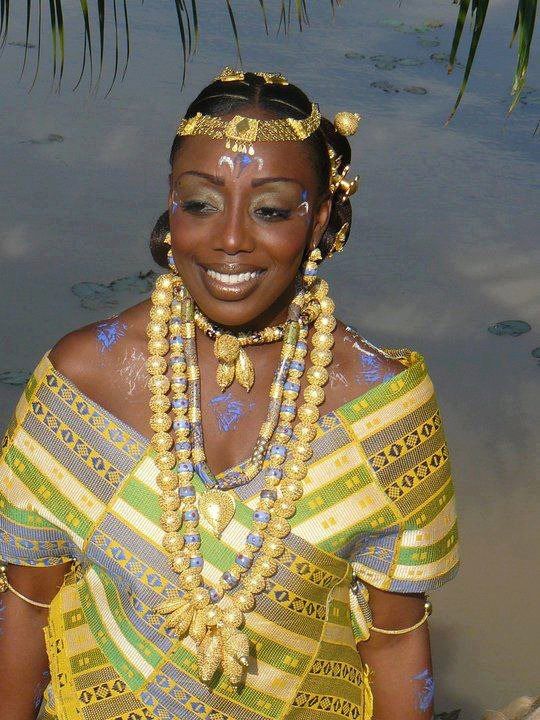
West Africa’s textile history is among the most celebrated in the world. The Ashanti people of present-day Ghana developed Kente cloth, a hand-woven silk and cotton fabric whose patterns carry specific names and meanings. Traditionally, certain Kente patterns were reserved exclusively for royalty.
In Mali, the Dogon and Bamana peoples developed Bogolan, also known as mud cloth, a cotton fabric dyed with fermented mud and plant-based solutions to create geometric patterns of deep cultural significance. Bogolan was worn by hunters for spiritual protection, by women after childbirth, and in various coming-of-age ceremonies.
Further north, across the Sahel, the Grand Boubou, a flowing robe worn by both men and women, emerged as the defining garment of West African nobility. Embroidered at the neckline and chest with intricate geometric or floral patterns, the boubou communicated both prosperity and refinement.
East Africa: The Swahili Coast and Indian Ocean Trade
East Africa’s position on the Indian Ocean trade routes shaped its textile culture profoundly. Arab, Indian, and Persian merchants brought silk, cotton, and new dyeing techniques. The Swahili Coast, stretching from Somalia to Mozambique, became a cultural and commercial crossroads where African, Arab, and Asian aesthetics fused.
The Kanga, a brightly printed cotton wrap, emerged from this fusion. Originally plain white cotton imported from India, it was transformed by East African women who demanded bolder, more colourful designs. By the late 19th century, Kanga had become a distinctive form of communication: printed with Swahili proverbs along the border, it allowed women to send messages through fabric.
Southern Africa: Beadwork, Skins, and Body as Canvas
In Southern Africa, clothing traditions were inseparable from body adornment. The Zulu, Xhosa, Ndebele, and Sotho peoples each developed distinctive visual languages using beadwork, animal skins, and pigment. Zulu beadwork was particularly sophisticated — a complex code in which colour combinations communicated messages between young men and women, invisible to outsiders.
The Ndebele people of present-day Zimbabwe and South Africa are known for their bold geometric body painting and their distinctive beaded aprons, blankets, and neck rings — each with specific meaning related to age, marital status, and social standing.
Natural materials: bark cloth, skins, cotton, and linen
Ancient African clothing relied on natural resources. In Central Africa, bark cloth was made by beating the inner bark of trees into soft, flexible fabric. This material was widely used for garments and ceremonial wear.
In many parts of Sub-Saharan Africa, cotton was cultivated and spun into thread, then woven into cloth. This marked the beginning of complex textile traditions that would later become globally recognised.
In North Africa, particularly in ancient Egypt, linen became the dominant fabric. It was valued for its lightness and purity, perfectly suited to the hot climate.
Animal skins were also widely used, particularly in Southern Africa, where they were shaped into garments and combined with beadwork to create visually striking pieces.
Clothing as a symbol of power and spirituality
In ancient African societies, clothing was never neutral. It carried meaning and power. Certain garments were reserved for leaders, priests, or specific social groups. Fabrics, colours, and patterns could indicate authority, wealth, or spiritual connection.
Clothing was also used in rituals and ceremonies. It could offer protection, mark sacred roles, or connect the wearer to ancestors. In many cultures, garments were believed to hold energy, making them an essential part of spiritual life.
Ancient Egypt and North Africa
Ancient Egypt represents one of the earliest and most influential fashion systems in history. Egyptian clothing was refined, symbolic, and highly structured.
Linen garments dominated, often white, representing purity and status. The elite wore finely woven fabrics, while simpler versions were worn by the general population. Clothing was complemented by elaborate accessories, including wigs, jewellery, and cosmetics.
Appearance was deeply tied to social hierarchy. Every element, from fabric quality to ornamentation, communicated status and identity.
Sub-Saharan Africa: early fibres and dyeing traditions
Across Sub-Saharan Africa, textile production developed into an advanced art form. Communities mastered spinning, weaving, and dyeing techniques, often using natural resources such as plants, minerals, and mud.
Indigo dye became especially important, producing deep blue fabrics that held both aesthetic and cultural significance. Patterns were not random. They told stories, conveyed messages, and preserved knowledge across generations.
These early innovations laid the foundation for what we now recognise as traditional African fashion.
The Impact of Trade Routes on African Clothing (15th–18th Century)
Arab and Trans-Saharan Trade
Long before European contact, trans-Saharan trade routes connected West and North Africa to the Mediterranean world. These routes carried gold, salt, ivory — and textiles. Egyptian cotton, North African wool, and Moroccan silk moved south and west, while West African weaving traditions moved north.
The introduction of new fibres and dyes through trade diversified African fashion considerably. Indigo — traded from West Africa to North Africa and beyond — became one of the most important dyes in the continent’s history. The Tuareg people of the Sahara became famous for their indigo-dyed robes, which stained the skin blue and earned them the nickname ‘the blue people.’
The Transatlantic Slave Trade and Its Impact on Dress
The transatlantic slave trade — one of history’s greatest atrocities — had a profound and devastating impact on African dress. Enslaved Africans were systematically stripped of their clothing, their adornments, and the cultural identity encoded within them. This was not incidental — it was deliberate, part of a process of dehumanisation.
Yet resistance persisted. Enslaved Africans in the Americas found ways to maintain elements of their dress traditions — in head wraps, in beadwork, in the choice of colour and pattern when permitted. The Gele (Yoruba head wrap) survived the Middle Passage and became a symbol of resilience across the African diaspora.
The birth of Kente cloth in Ghana
Kente cloth emerged as one of the most significant textiles in African history. Handwoven and rich in symbolism, it was originally worn by royalty and associated with power and prestige.
Each pattern and colour combination carried meaning, transforming the fabric into a visual language.
Bogolanfini (mud cloth) in Mali
In Mali, Bogolanfini developed as a unique textile tradition. Made using fermented mud and plant-based dyes, it produced bold geometric patterns with deep cultural significance.
It was worn in specific contexts, including hunting, initiation, and motherhood, linking clothing to life stages and spiritual protection.
Colonial Era and African Fashion (19th–20th Century)
How colonisation tried to suppress traditional dress
European colonisation involved a systematic effort to suppress African cultural expression — including dress. Missionaries across the continent condemned traditional garments (especially those that left parts of the body uncovered) as signs of ‘savagery.’ Colonial administrations in some regions enacted laws requiring Africans to wear Western-style clothing in urban and official settings.
The message was clear: African dress was primitive, while European dress was civilised. This cultural imperialism had lasting psychological effects — effects that Africans would spend the 20th century actively resisting and reversing.
The Arrival of Wax Print Fabric
One of African fashion’s great ironies is the story of Ankara — the wax-resist printed cotton fabric now regarded as quintessentially African. Its origins lie in Dutch industrialisation. In the 1840s, Dutch textile manufacturers developed a mechanised version of Indonesian batik — a wax-resist dyeing technique. They initially tried to sell it to the Indonesian market, but it was rejected as an inferior imitation.
Dutch traders then brought the fabric to West Africa — and here, something remarkable happened. West Africans did not merely accept the fabric; they transformed it. They demanded specific patterns, created new colour combinations, and assigned each design a name and a meaning. They made it their own. Today, Ankara wax print is so deeply woven into West African cultural identity that its Dutch origins are largely forgotten.
African Dress as Political Resistance
As African independence movements gained strength in the mid-20th century, clothing became a potent political symbol. Kwame Nkrumah, Ghana’s first president, deliberately wore Kente cloth at his 1957 independence ceremony — a statement that African dress was not primitive but presidential. Nelson Mandela’s adoption of the Madiba shirt — a loose, brightly patterned shirt — after his release from prison carried similarly political connotations.
The dashiki — a colourful West African garment — was adopted by African-American civil rights activists in the 1960s and 70s as a symbol of Black pride and Pan-African solidarity. What was once daily West African wear became a global emblem of resistance.
The Rise of Modern African Fashion (1960s–2000s)
Post-Independence Fashion Renaissance
African independence — coming wave by wave through the 1950s, 60s, and 70s — unleashed a creative renaissance. Freed from colonial cultural constraints, African designers, musicians, and artists began exploring and celebrating their own aesthetics. Fashion was central to this project.
In Bamako, Mali, the photographers Seydou Keïta and Malick Sidibé documented the vibrant fashion scene of post-independence Mali. Their portraits — of young men in sharp suits, women in elaborate boubous and European-influenced dresses, couples in carefully coordinated outfits — capture a moment of extraordinary cultural confidence and creativity.
The First African Fashion Designers
The late 20th century saw the emergence of the first African designers to gain international recognition. Chris Seydou, a Malian designer who trained in Paris, is widely considered the pioneer — he was the first to incorporate traditional Malian bogolan fabric into contemporary fashion, showing it on the runways of Paris in the 1970s and 80s. He proved that African textiles belonged in haute couture.
Alphadi of Niger, known as ‘the magician of the desert,’ founded the Festival International de la Mode en Afrique (FIMA) in 1998 — the continent’s first major international fashion festival. These pioneers laid the groundwork for the global African fashion movement that would explode in the 21st century.
African fashion weeks and global visibility
Fashion weeks across the continent created platforms for designers to showcase their work. Cities like Lagos, Dakar, and Johannesburg became key centres of creativity.
These events connected African fashion to global markets and audiences.
How African fabrics went global
African textiles gained international recognition, appearing in global fashion houses and influencing mainstream trends.
What was once considered local became global, without losing its cultural significance.
African Fashion Today: From the Streets to the Runways
The Global Explosion
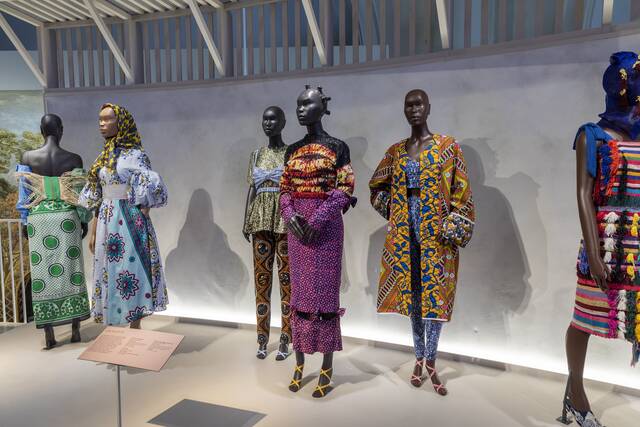
The 21st century has seen African fashion achieve global cultural dominance in ways that would have seemed impossible a generation ago. Designers like Ozwald Boateng (Ghana/UK), Duro Olowu (Nigeria/UK), Laduma Ngxokolo (South Africa), and Imane Ayissi (Cameroon) are dressing international celebrities and showing at the world’s most prestigious fashion weeks.
The cultural moment arrived with full force when Beyoncé released Black Is King in 2020 — a visual album that placed African and diasporic fashion at the centre of mainstream global culture. African aesthetics — Ankara prints, elaborate headwraps, beadwork, raffia — were no longer exotic. They were aspirational.
African Fashion Weeks
The continent now hosts a thriving calendar of fashion weeks. Lagos Fashion Week, founded in 2011, has become one of the most dynamic fashion events in the world — a launchpad for Nigerian designers and a showcase for West African creativity. South African Fashion Week and Dakar Fashion Week draw international buyers and press. Africa Fashion Week London and New York carry these traditions to the diaspora.
The Diaspora Effect
Perhaps the most powerful force in contemporary African fashion is the African diaspora. Designers who grew up between African and European or American cultures have created a distinctive aesthetic that honours African heritage while engaging with global fashion systems. This hyphenated identity — British-Nigerian, French-Senegalese, American-Ghanaian — has produced some of the most innovative fashion of the 21st century.
Social media and the democratization of style
Digital platforms have transformed visibility. African designers now reach global audiences directly, without traditional gatekeepers.
This has accelerated the growth of African fashion as a global movement.
Sustainable fashion and craftsmanship
African fashion is inherently aligned with sustainability. Many traditions emphasise handmade production, local materials, and long-lasting garments.
As the global industry shifts towards sustainability, African fashion offers valuable models rooted in tradition.
Key African Fabrics Through History
Understanding African fashion history requires understanding its textiles. Each of these fabrics carries centuries of history:
- Habesha kemis (Ethiopia) — white cotton dress with intricate embroidered borders, worn for celebrations
- Kente (Ghana) — hand-woven silk and cotton, royally significant patterns, worn during celebrations
- Bogolan / Mud cloth (Mali) — cotton dyed with fermented mud, geometric patterns with protective meaning
- Kanga (East Africa) — printed cotton wrap with Swahili proverbs, worn by women across East Africa
- Aso-oke (Nigeria) — hand-woven Yoruba fabric in three types: Etu, Sanyan, and Alabere
- Ankara / Wax print — Dutch-origin, African-transformed printed cotton, now the most globally recognised African fabric
African Fashion by Region: A Brief Historical Overview
African fashion varies significantly across regions, each shaped by its own history and influences.
- West Africa is known for its rich textile traditions and ceremonial garments.
- East Africa reflects strong trade influences and vibrant printed fabrics.
- Southern Africa emphasises beadwork and symbolic adornment.
- North Africa blends African, Arab, and Mediterranean influences.
Together, these regions form a diverse and interconnected fashion landscape.
The history of African fashion is a story of resilience, creativity, and transformation. From ancient bark cloth to contemporary runway collections, it reflects a continuous dialogue between tradition and innovation.
Despite centuries of disruption, African fashion has preserved its essence while evolving with the world. Today, it stands as one of the most influential and dynamic forces in global fashion.
To understand African fashion is to understand a living heritage, one that continues to inspire, redefine, and shape the future of style.