
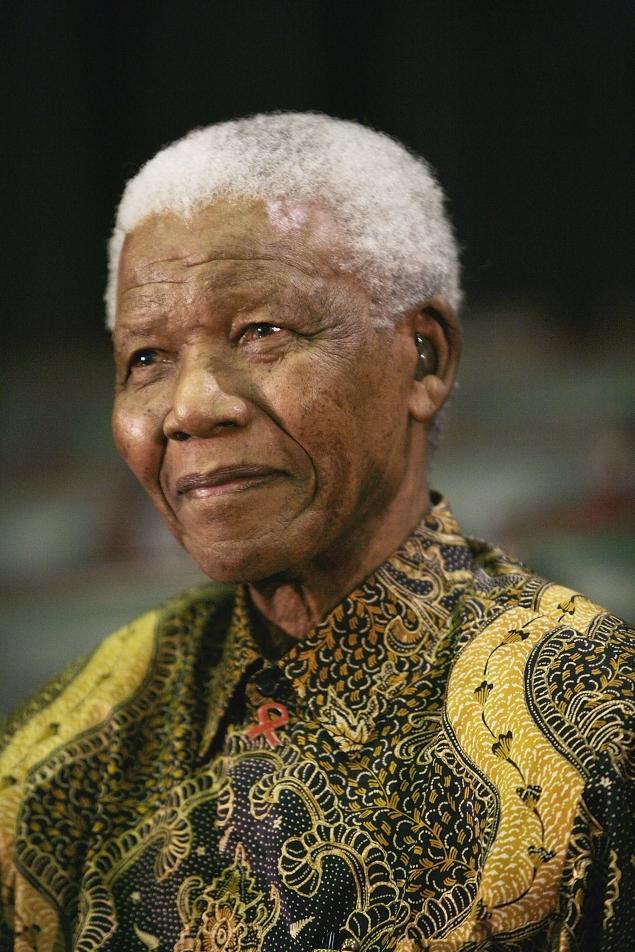
Nelson Mandela’s Madiba Shirts: Fashion, Freedom and Politics Explained
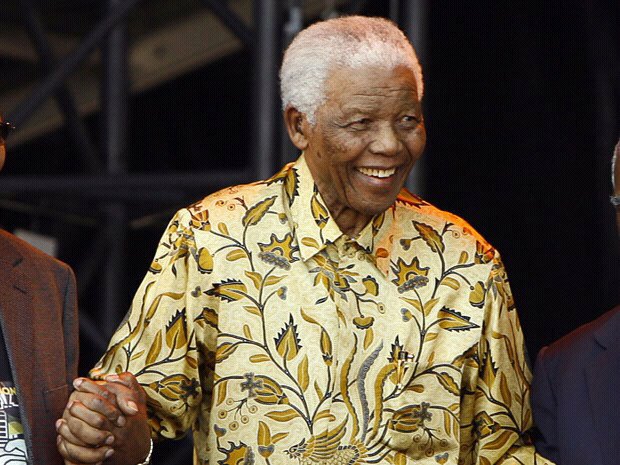
Nelson Mandela’s Madiba shirts are loose-fitting, brightly patterned silk shirts worn untucked without a tie — and one of the most politically significant pieces of clothing of the 20th century. Mandela wore them as President of South Africa from 1994, deliberately rejecting the Western business suit as a statement of African identity, solidarity with his people, and personal freedom after 27 years in prison.
On December 5 — the anniversary of his death in 2013 — and on July 18, Mandela Day, the world returns to the story of a man whose fashion was inseparable from his politics. This is the complete guide.
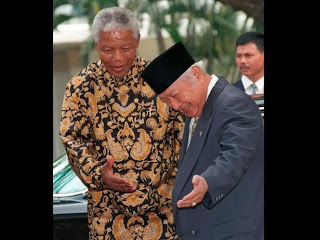
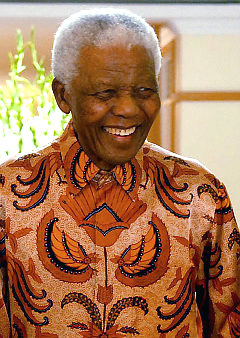
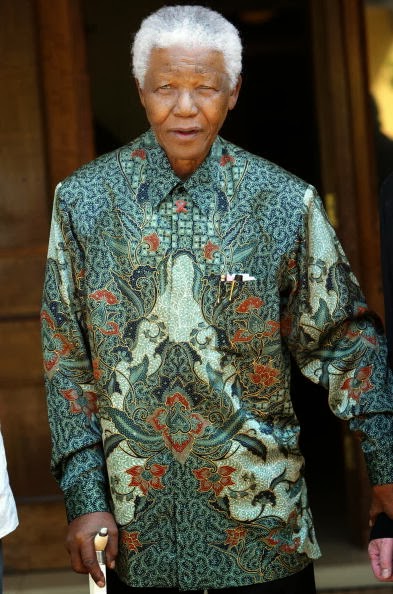
| QUICK ANSWER |
| A Madiba shirt is a loose-fitting silk or cotton shirt with vivid batik print patterns, worn untucked without a tie. Nelson Mandela popularised it during his presidency (1994–1999) as a political statement against Western power dress. The name comes from his Xhosa clan name ‘Madiba’. When asked why he wore it, Mandela replied: ‘You must remember that I was in jail for 27 years. I want to feel freedom.’ |
What Is a Madiba Shirt? The Complete Definition
A Madiba shirt has six defining characteristics:
→ Loose-fitting, straight cut, worn long — over the trousers, not tucked in
→ Made of silk or cotton with vivid, colourful batik print patterns
→ Worn without a tie and without a jacket, even in formal settings
→ Patterns include flowers, fish, birds, geometric shapes and African motifs
→ Named after Nelson Mandela’s Xhosa clan name, Madiba — a term of deep respect and affection
→ Originally adapted from Indonesian batik clothing, then made by South African designers
Mandela preferred earthier tones — browns, greens, deep reds — though brightly coloured versions became widely popular. He eventually owned dozens of the shirts, wearing them to state dinners, United Nations addresses, business meetings, and casual occasions alike.
Within the clothing industry, Mandela’s willingness to wear casual attire in formal situations marked a new style of international business dress — one that challenged the unspoken rule that power required a Western suit. The BBC said he ‘paved the way for a fashion revolution’ in the South African parliament.
The Origin of the Madiba Shirt — Where Did It Come From?
The Madiba shirt’s origin has three parallel stories, all of which are true and all of which matter.
1. The Indonesian Batik Connection
The Madiba shirt is directly adapted from Indonesian batik shirts. When Indonesian President Suharto met Mandela after his release from prison in 1990, he gifted him batik shirts. Mandela was immediately drawn to them — not just aesthetically, but politically. Here was an Asian head of state who had found a way to dress with authority without dressing Western. Indonesia’s first president, Sukarno, had promoted batik shirts as a symbol of independence from Dutch colonial dress. That resonance was immediate and profound.
2. Yusuf Surtee — The Man Who Supplied Mandela’s Wardrobe
Yusuf Surtee was a South African clothing store owner who supplied Mandela’s outfits for decades. According to Surtee, the Madiba shirt design was based on Mandela’s specific request for a shirt like Suharto’s batik attire — adapted and made locally by South African designers and tailors. Surtee ensured Mandela’s entire wardrobe came from South African makers, never from European luxury houses.
3. Desré Buirski — The Designer Who Gave Mandela His Signature
On 7 May 1994 — days before his presidential inauguration — fashion designer Desré Buirski arranged for a hand-printed black shirt with tan fish patterns to be passed to Mandela’s bodyguard during a Cape Town synagogue visit. Mandela wore it to the dress rehearsal for the opening of South Africa’s first democratic parliament. In her own words: ‘While Mandela was a man of the people, he also wanted to be a man apart.’ South African designer Sonwabile Ndamase also claims to have made the first Madiba shirt for Mandela in 1990, shortly after his release from prison.
The Batik Technique — African and Indonesian Roots
The Madiba shirt connects three continents through a single technique — and that geography is politically significant.
Batik is a wax-resist dyeing technique in which hot wax is applied to cloth to resist dye, creating patterns of extraordinary precision and richness. It is not simply a fabric print — it is a centuries-old craft tradition recognised by UNESCO as an Intangible Cultural Heritage of Indonesia in 2009.
Crucially for understanding Mandela’s choice, batik is practiced across two continents that share more history than is commonly acknowledged:
→ West Africa: Côte d’Ivoire, Togo, Senegal — where batik has been practiced for centuries in vivid indigo and earth tones
→ Central and East Africa: Madagascar, Tanzania, Kenya — where batik techniques blend with local textile traditions
→ Southeast Asia: Indonesia, specifically Java — the heartland of batik, where it became a symbol of national independence
When Mandela wore a batik shirt, he was wearing a garment that belonged to the Global South — to formerly colonised peoples who had used textile culture as a form of resistance and national identity. The connection to Sukarno’s Indonesia was not coincidental: both countries had fought for independence from European colonialism, and both had found ways to express that independence through dress.
The batik technique also connects to the wider African fashion story. African wax prints — the vivid, geometric fabrics associated with West African fashion today — draw on the same batik tradition that entered West Africa through Indonesian and Dutch trading routes in the 19th century. When Mandela wore his Madiba shirt, he was, whether consciously or not, wearing a garment that belonged to a shared textile heritage spanning Africa and Asia.
The Political Message Behind the Madiba Shirt
Nelson Mandela attached great importance to sartorial language. Behind the Madiba shirt was a clear and deliberate political message: identifying with the majority of his people, who did not wear suits.
This message had four precise dimensions:
→ Rejection of colonial dress codes — the Western business suit was the uniform of apartheid power in South Africa
→ Solidarity with ordinary South Africans — the people who elected him wore colour and cloth, not grey flannel
→ African and Global South pride — the vivid batik patterns referenced textile traditions shared across Africa and Asia, connecting Mandela to a wider community of post-colonial nations
→ Signal of change — informal warmth replacing rigid formality, telling the world that South Africa’s new power would look and feel different
Art historian Lize van Robbroeck articulated this in 2013 with particular clarity:
“Mandela’s idiosyncratic shirts signal his freedom to take or leave Western conventions of power. While the suit speaks the language of legality, constitutions, and contracts, the Mandela shirt speaks the language of freedom and self-constitution, of a humanism that is not exclusively defined by the West.” — Lize van Robbroeck, art historian, 2013
Mandela himself confirmed this reading when a young girl once asked why he wore a shirt like that:
“You must remember that I was in jail for 27 years. I want to feel freedom!” — Nelson Mandela
Why Mandela Refused Giorgio Armani — and What It Meant
Italian designer Giorgio Armani offered to dress Nelson Mandela. Mandela declined.
This refusal was not a fashion preference — it was a political statement. By turning down one of the most prestigious names in Western luxury fashion and choosing instead to wear shirts made by South African designers, Mandela communicated three things simultaneously:
→ His independent spirit: he would not be dressed by European luxury, even when freely offered
→ His support for South African creative industries: Desré Buirski, Sonwabile Ndamase, and Yusuf Surtee were local, South African, Black creators
→ His authenticity as a man of the people: a man of the people does not wear Armani to meet the people
In refusing Armani, Mandela also refused the implicit message that African leaders needed European designers to look credible on the world stage. It was one of many moments where his fashion spoke as loudly as his words.
Nelson Mandela’s Dressing Style — A Political Timeline
Mandela’s fashion changed deliberately with each phase of his life. Every clothing choice was a political statement.
1950s — The Sharp-Dressed Lawyer and Activist
In Johannesburg, Mandela practised law in impeccable double-breasted suits. Dressed as a professional equal, he refused the visual hierarchy that white South Africa expected of Black men. His style earned him the nickname ‘The Black Pimpernel’ — both for his ability to evade authorities and for his undeniable elegance.
1962 — Rivonia Trial — The Leopard Kaross — Claiming African Identity
Mandela entered the courtroom in a traditional Xhosa leopard-skin kaross — the ceremonial dress of a Thembu clan chief — with multi-layer bead necklaces and a gold arm bracelet. In ‘A Long Walk to Freedom’ he wrote: ‘That day, I felt myself to be the embodiment of African nationalism. The kaross was also a sign of contempt for the niceties of white justice.’ The image was published worldwide.
1964–1990 — Prison Uniform — Number 46664
The apartheid authorities forced Mandela into a khaki prison uniform with short trousers — short trousers specifically designed to humiliate Black prisoners by denying them the dignity of full-length clothing. For 27 years. His prisoner number, 46664, would later become a humanitarian brand and clothing label, reclaiming what had been used to erase him.
1990 — Release — The First Batik Shirts
Walking free on 11 February 1990, Mandela did not wear a suit. From his first days of freedom he began wearing colourful batik shirts. Designer Sonwabile Ndamase claims to have made the first one for him in 1990, shortly after his release.
May 1994 — The Inaugural Shirt
Designer Desré Buirski arranged for a hand-printed black shirt with tan fish patterns to reach Mandela days before his presidential inauguration. He wore it to the dress rehearsal for the opening of South Africa’s first democratic parliament. The Madiba shirt era had officially begun.
1994–1999 — President in a Batik Shirt
As President, Mandela wore Madiba shirts to UN addresses, G8 summits, and meetings with world leaders. He declined Armani, chose South African designers, and wore the same colourful shirts to state dinners that he wore to community events. The BBC said he paved the way for a fashion revolution.
Post-2000 — 46664 — Reclaiming the Prison Number
Mandela created the 46664 clothing brand — his prisoner number transformed into a humanitarian initiative for AIDS awareness and South African fashion. At the 2011 Johannesburg Fashion Week, designer David Tlale threw 100 t-shirts into the Mandela River as a gesture of solidarity. The number that had been used to erase his identity became a symbol of his legacy.
Nelson Mandela’s Most Iconic Outfits — What They Communicated
The Leopard Kaross (1962 Trial)
Traditional Xhosa ceremonial dress worn to the Rivonia Trial — a political act of cultural sovereignty. Mandela as African chief, not colonial subject. The apartheid court had no framework for what they were seeing. The image went around the world.
The Prison Uniform (1964–1990)
Number 46664. A khaki prison shirt and short trousers — the short trousers specifically designed to humiliate Black prisoners by refusing them the dignity of full-length clothing. Mandela wore this for 27 years. The number was later reclaimed as a humanitarian brand.
The Black Fish-Pattern Batik Shirt (May 1994)
The shirt that started everything. Given to Mandela by designer Desré Buirski days before his presidential inauguration, this black shirt with tan fish patterns became the prototype for what the world came to know as the Madiba shirt. Mandela wore it to the dress rehearsal for the opening of South Africa’s first democratic parliament.
The Springboks Jersey + Madiba Shirt (1995 Rugby World Cup Final)
At the 1995 Rugby World Cup Final at Ellis Park, Mandela walked onto the pitch in a Springboks jersey — with the pattern of a Madiba shirt visible at the collar underneath. The image became a global symbol of post-apartheid reconciliation. The Springboks had been a symbol of white South Africa; Mandela wore their jersey over his Madiba shirt.
The UN Address Shirts (1994–1999)
In rooms where every other head of state wore a suit and tie, Mandela’s Madiba shirt made him immediately recognisable and made the same political statement every time: African sovereignty does not need to dress Western to hold power.
The Madiba Shirt and the History of African Fashion
Nelson Mandela’s fashion choices sit within a much longer history of African leaders using clothing as political language. Kwame Nkrumah of Ghana wore kente cloth and batakari shirts. Julius Nyerere of Tanzania promoted the kanzu. Thomas Sankara of Burkina Faso wore locally-produced cotton uniform to support domestic textile industries.
The Madiba shirt belongs in this tradition: African fashion as a statement of sovereignty, identity, and resistance to the colonial expectation that power dresses Western.
This history also connects to the wider African fashion story — from the origins of African wax prints to the influence of African culture on global fashion. Mandela’s shirts are not an exception to African fashion history. They are one of its most visible and politically significant expressions — worn on the world stage, in front of every camera, at every summit, for five years.
The Legacy of the Madiba Shirt
The Madiba shirt is now one of the most recognisable garments in the world. It is worn by tourists and sportspeople in South Africa, by Tanzanian men as a sign of African solidarity, and by anyone who wants to carry something of Mandela’s spirit.
In 2021, the Museum at FIT (Fashion Institute of Technology, New York) exhibited Mandela’s actual Madiba shirts, loaned by his family — Tukwini Mandela and Maki Mandela. Dr. Valerie Steele, Director of the Museum at FIT, described them as ‘deeply meaningful artifacts of history and human courage.’
Mandela’s granddaughter Tukwini Mandela explained his choice in her own words:
“He opted to wear these shirts because he did not want to be confined by a suit and tie. Africa’s climate is very hot and he wanted something that was elegant and easy to wear, that would reflect the bright colours of Africa and his easy, laid-back leadership style.” — Tukwini Mandela, Mandela’s granddaughter
Today the Madiba shirt is also a symbol of the broader shift it helped trigger: a renewed international interest in African textile traditions — batik, wax prints, hand-painted fabrics — and a growing recognition that African aesthetics can and should hold space in the highest rooms of global power.
Mandela Day — July 18: Why This Date Matters
July 18 is Mandela Day, declared by the United Nations in 2009 to honour Nelson Mandela’s 67 years of public service. The date marks his birthday — born on 18 July 1918 in Mvezo, Eastern Cape, South Africa.
The UN asks people to dedicate 67 minutes of their time on July 18 to serving others — one minute for each year of Mandela’s public service. It is observed in over 100 countries.
On Mandela Day, the Madiba shirt takes on additional significance. It is a garment of values — freedom, dignity, solidarity, African pride — made wearable. Understanding the shirt is understanding the man. And understanding the man is understanding why those 67 minutes matter.
This article was first published on December 5 — the anniversary of his death in 2013 — and is updated every July 18 to mark Mandela Day. His fashion was his politics. Both deserve to be remembered, twice a year, every year.
Explore More on African Fashion and Black History
The Madiba shirt connects to broader stories this blog explores in depth:
→ The Ultimate Guide to African Fashion
→ The History of African Fashion
→ The Origin of African Prints
→ How Black Culture Influenced Global Fashion
→ Black Women Who Made History
→ The History of Black Fashion Models
Frequently Asked Questions: Nelson Mandela’s Madiba Shirts
A Madiba shirt is a loose-fitting, brightly patterned silk or cotton shirt worn untucked and without a tie, adapted from Indonesian batik. Nelson Mandela popularised it during his presidency of South Africa (1994–1999) as a deliberate political statement rejecting Western business dress. The name ‘Madiba’ comes from Mandela’s Xhosa clan name — a term of deep respect and affection. The shirts typically feature vivid patterns including flowers, fish, birds, and geometric designs. Mandela preferred earthier tones, though bright colours became equally associated with the style.
Nelson Mandela wore the Madiba shirt for political, cultural and personal reasons. Politically, it rejected the Western business suit — the uniform of apartheid power — and expressed solidarity with ordinary South Africans who did not wear suits. Culturally, the batik technique connected him to African and Indonesian textile traditions and to a broader community of post-colonial nations. Personally, after 27 years in prison, he said he wanted to feel freedom. He also declined Giorgio Armani’s offer to dress him, choosing instead South African designers.
The Madiba shirt has three origin points. First, Indonesian batik shirts given to Mandela by President Suharto after his release in 1990 — Indonesia’s leaders had used batik as a symbol of independence from Dutch colonialism. Second, Yusuf Surtee, who supplied Mandela’s wardrobe for decades based on Mandela’s request for a shirt inspired by Suharto’s attire. Third, South African designer Desré Buirski, who gave Mandela his first iconic fish-pattern batik shirt in May 1994, days before his presidential inauguration. Designer Sonwabile Ndamase also claims to have made the first Madiba shirt for Mandela in 1990.
Batik is a wax-resist dyeing technique applied to cloth to create vivid, colourful patterns. Hot wax is applied to fabric to resist the dye, producing intricate designs. Batik originated in Java, Indonesia, and was recognised by UNESCO as an Intangible Cultural Heritage in 2009. However, batik is also practiced across West and Central Africa — in Côte d’Ivoire, Togo, Madagascar, and elsewhere — where it has been part of textile tradition for centuries. This dual African and Indonesian heritage makes the Madiba shirt a garment of Global South solidarity, connecting two regions that share a history of colonial resistance through textile culture.
Nelson Mandela’s dressing style changed deliberately with each phase of his life. In the 1950s: sharp double-breasted suits as a lawyer, asserting professional equality with white South Africans. In 1962: a Xhosa leopard-skin kaross at the Rivonia Trial, claiming African cultural sovereignty. From 1964–1990: forced prison uniform, number 46664. After 1990: colourful Madiba batik shirts, rejecting Western power dress. As President (1994–1999): Madiba shirts at UN addresses, G8 summits and state dinners worldwide. Every choice was a political statement.
Nelson Mandela refused Giorgio Armani’s offer to dress him because accepting would have contradicted his political identity. An African president wearing Italian luxury fashion would have sent a message of dependence on European validation. Instead, Mandela chose shirts made by South African designers — Desré Buirski, Sonwabile Ndamase — and had his wardrobe supplied by South African merchant Yusuf Surtee. The refusal was an expression of independent spirit, support for South African creative industries, and authenticity as a man of the people.
At the Rivonia Trial in 1962, Nelson Mandela wore a traditional Xhosa leopard-skin kaross — the ceremonial dress of a Thembu clan chief — with a multi-layer bead necklace and a gold arm bracelet. It was a deliberate act of cultural sovereignty. In ‘A Long Walk to Freedom’ he wrote: ‘That day, I felt myself to be the embodiment of African nationalism, the inheritor of Africa’s difficult but noble past and her uncertain future. The kaross was also a sign of contempt for the niceties of white justice.’ The image was published worldwide.
46664 is a humanitarian clothing brand created by Nelson Mandela, named after his prisoner number at Robben Island (prisoner 466, arriving in 1964). After his release, Mandela reclaimed the number as a symbol of resilience and used it for an AIDS awareness campaign and clothing label. Supported by South African designer David Tlale, the brand channelled profits into community development and the South African clothing industry. At the 2011 Johannesburg Fashion Week, Tlale threw 100 t-shirts into the Mandela River as a gesture of support.
Mandela Day is July 18 — Nelson Mandela’s birthday, declared an international day by the United Nations in 2009. Born on 18 July 1918 in Mvezo, Eastern Cape, South Africa, Mandela gave 67 years to public service. The UN asks people to dedicate 67 minutes to serving others on this day — one minute for each year of his service. It is observed in over 100 countries. Wearing or learning about the Madiba shirt on July 18 is a meaningful way to engage with the values Mandela embodied through fashion: freedom, dignity, African pride, and the rejection of colonial definitions of power.
| ABOUT THE AUTHOR |
| Doria Adouké is a French illustrator and writer based in London specialising in African fashion, Black history, and Black women’s culture. She has written about African fashion history since 2009, covering the history of African prints, batik, Black models, and the political dimension of African dress. This article was first published on December 5, the anniversary of Mandela’s death, and updated on July 18, Mandela Day. Her illustration collection celebrating Black women is available at doriaadouke.com. |