
Famous Black Artists in History
Art is how a culture sees itself. It is how history is interpreted, contested, and reimagined. And Black artists, throughout history and across every medium, have been at the centre of that conversation, even when the art world tried everything in its power to exclude them.
The artists below are not simply ‘great artists who happened to be Black.’ They are artists whose Blackness was central to their vision, their subject matter, their relationship with institutions, and their impact. They made work that was honest about the world they inhabited and in doing so, they changed the world for everyone.
Behind each name below are thousands of Black artists who never had access to galleries, critics, or collectors — whose work was made in communities, for communities, and often not considered ‘art’ at all by the institutions that controlled that definition. Their contributions are real, even where their names are lost.
Loïs Mailou Jones – The Artist Who Brought Africa to American Canvas
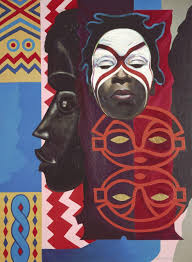
Jones was a transformative artist and teacher who helped redefine the legacy of the Harlem Renaissance. Her body of work is especially notable for the vast array of experimentation. Over her astonishing sixty year career, she created masterpieces in multiple mediums, and through her extensive travels, she continually introduced new styles and motifs into her work. Jones was one of the first major artists to include African and Caribbean influences into her painting, often focusing on black women art.
Looking through the many phases of her career, there is one unifying feature. Her pieces are captivating, deeply human views into her subjects — whether captured in charcoal, oils, watercolors, or any other medium. Her ability to master so many styles without compromising her vision secures her place as one of the greatest artists to ever live.
Jean-Michel Basquiat – The Graffiti Poet Who Conquered the Art World
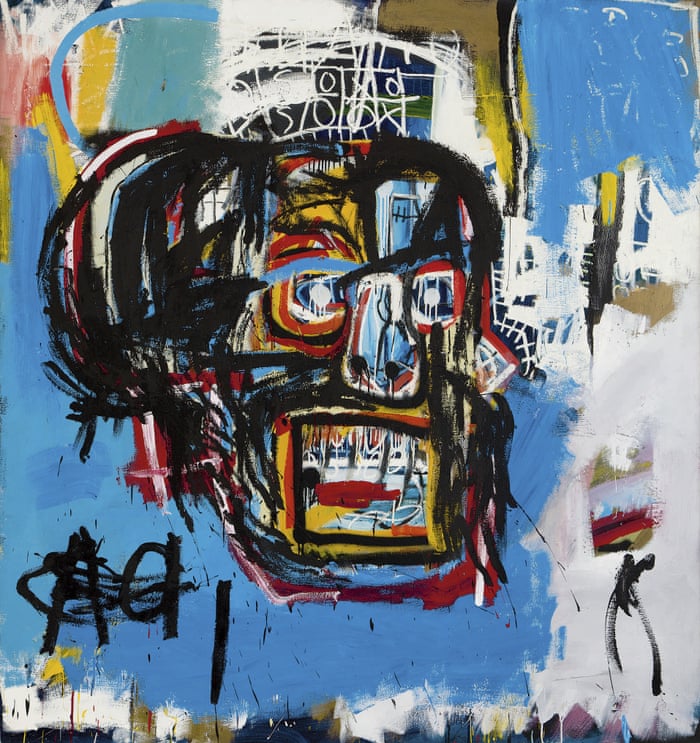
Basquiat’s work began in a band of graffiti artists known as SAMO. The group covered the walls of the Lower East Side of Manhattan in enigmatic poetry and turns of phrase, and this association of art and text informed Basquiat for his entire career. While his life was cut tragically short, he made the most of his 27 years — leaving behind one of the most celebrated bodies of work in the 20th century.
With an eye toward social commentary, Basquiat’s energetic pieces sum up the major movements of his time while turning them on their head. The pieces are battlegrounds of neo-expressionism and pop art, accompanied by text that always seeks to complicate the knee jerk reactions of his public. His work is deeply committed to anti-racism, anti-colonialism, and class struggle — themes that continue to be relevant decades after his untimely death in 1988.
Edward Mitchel Bannister –The Landscape Painter They Could Not Ignore
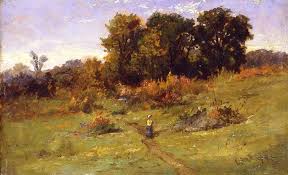
Bannister stands as one of the few black artists from the 19th century who was able to see his work celebrated in his lifetime. Born in Canada in 1828, he took up residence in New England when he was twenty, and there he began painting the countryside. His early work faced vicious, racist attacks by the press. Yet, Bannister would not be deterred.
His major influence came from the Barbizon school — a realism that arose in reaction to the romanticism dominant at the time. Bannister’s landscapes reveal this commitment to realism and atmosphere. His ravenous intellect led to an opening up in subject matter, and he created portraiture, mythological scenes, and genre pieces, all informed by his extensive reading.
Alma Thomas – The Abstract Genius Born Ahead of Her Time
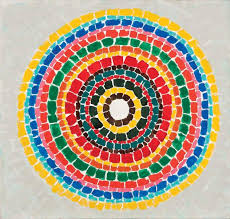
Thomas was a painter at the forefront of abstract expressionism. Born in 1891 in the southern state of Georgia, she began her professional life in Washington D.C. as a teacher. She started painting in a representational style, but when she studied the work of the Colour Field movement — focused on large sections of single colours — her approach changed radically. It is this period of exuberant, forward-thinking work that we remember her for today.
Thomas’s pieces often took inspiration from her garden. The pastel palette and subtle rhythms produce some of the most mesmerising abstract pieces from the 20th century. Her understanding of mathematics and architecture gives her work a precision and structural sophistication that balance out the softness of the colour. Thomas was a genius born far ahead of her time, and we are only now catching up to her body of work.
More Black Artists Who Deserve a Place in History
Augusta Savage — The Sculptor Who Built a Generation
Augusta Savage was one of the most important figures of the Harlem Renaissance — not only as a sculptor whose powerful work depicted the dignity and beauty of Black subjects, but as a teacher who trained a generation of Black artists including Jacob Lawrence and Gwendolyn Knight. When she was rejected from a summer art programme in France in 1923 because of her race, she turned the experience into fuel. Her sculpture ‘The Harp,’ commissioned for the 1939 World’s Fair in New York, became one of the most iconic images of the era. Savage gave everything to nurturing Black artistic talent — and her own legacy was obscured for decades as a result.
Faith Ringgold — The Storyteller Who Sewed History
Faith Ringgold is an artist, author, and activist whose story quilts — large-format narrative works combining painting, quilted fabric, and written text — fused African textile traditions with political art in a way that had never been done before. Her 1967 work ‘American People Series #20: Die’ depicted a race riot with unflinching honesty at a time when the art establishment had no interest in such subjects. Today, her children’s book ‘Tar Beach’ — based on one of her quilts — is a classic of American literature. Ringgold proved that the art world’s boundaries were not natural — they were chosen.
Elizabeth Catlett — The Printmaker of Black Womanhood
Elizabeth Catlett’s prints and sculptures centred the experience of Black women with a clarity and power that was genuinely radical. Her 1946-47 series ‘The Negro Woman’ depicted Black women as workers, mothers, activists, and survivors — subjects that the mainstream art world had no interest in treating with dignity. Catlett was so politically outspoken that the US government labelled her an ‘undesirable alien’ and she eventually settled permanently in Mexico, where she continued creating until her death in 2012 at the age of 96.
Kerry James Marshall — The Painter Who Claimed Museum Space for Black Life
Kerry James Marshall is one of the most significant living painters in the world — and his project is, in his own words, to insert Black figures into the tradition of Western painting from which they have been excluded. His large-scale canvases depict Black everyday life — barbecues, beauty salons, public parks, interiors — in the style of the Old Masters, insisting that Black life is worthy of the same artistic attention that has historically been reserved for white subjects. His work sells for tens of millions of dollars and hangs in the world’s greatest museums. He did it by refusing to paint anything other than Black people.
Why Black Art History Matters
The artists above did not simply make beautiful things. They made beautiful things in the face of a world that actively tried to prevent them from doing so. Understanding their stories is understanding how culture is made, who gets to make it, who gets to be seen in it, and who benefits when its making is finally opened up.
When you look at a Black woman illustration print, you are participating in this tradition. Art that centres Black women, made by an artist who believes in their visibility, is exactly what the artists above were fighting for, each in their own time and medium.
Explore More Black History
History of Black fashion models
If you are looking for incredible art from a black woman artist, check out our black art prints. These fine art works are high quality prints, available in limited edition.