
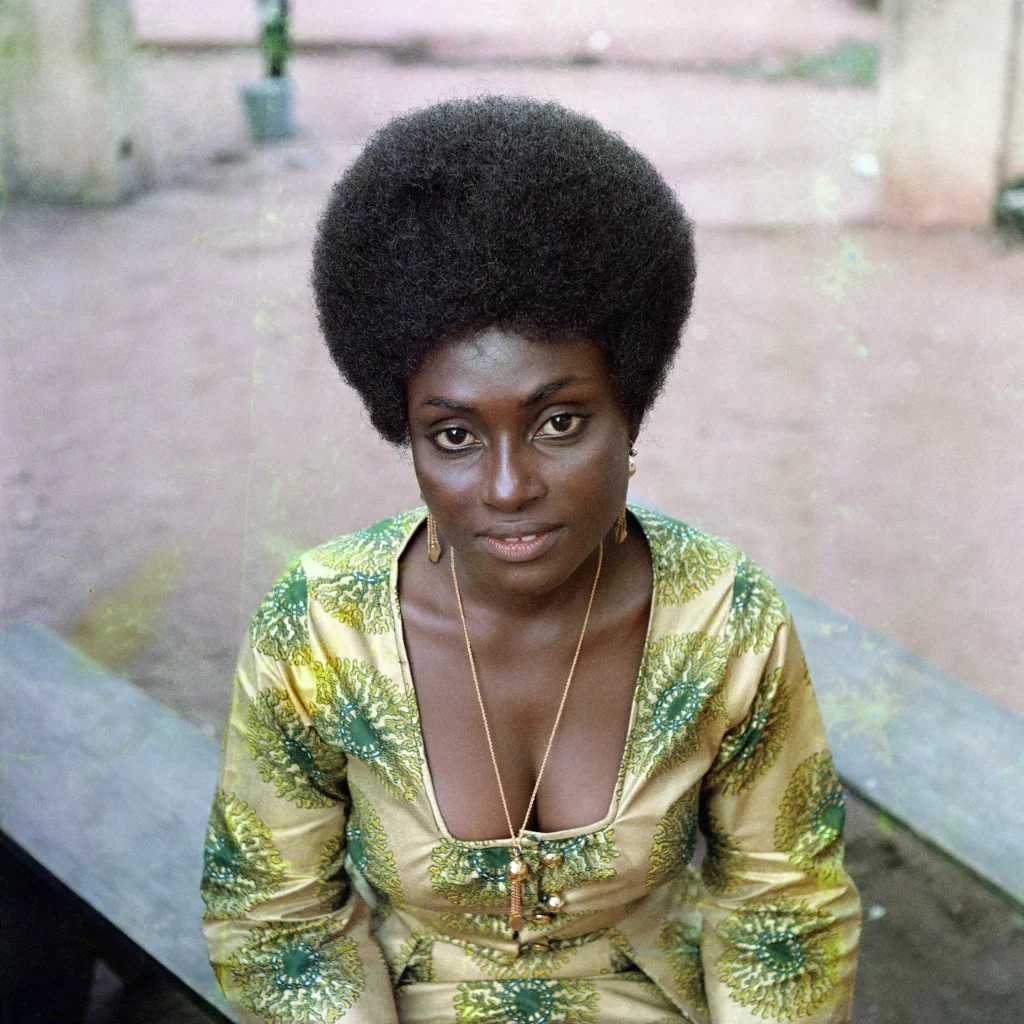
African Fashion and Independence: How a Continent Reclaimed Its Style
Introduction
In 1957, Kwame Nkrumah stood before a crowd of hundreds of thousands in Accra and declared Ghana’s independence from British colonial rule. He was wearing Kente cloth.
That choice — deliberate, defiant, and deeply symbolic — announced something far beyond politics: African dress was not a relic of the past. It was the future.
The decades that followed — the 1950s, 60s, 70s, and into the 80s — were among the most creatively explosive in African fashion history. Freed from colonial cultural constraints, a continent found its voice. What emerged was not a simple return to tradition, but something far more dynamic: a fusion of African heritage and global modernity, expressed through cloth, cut, colour, and ceremony.
This is the story of how African independence transformed fashion — and how fashion, in turn, shaped the course of African independence.
Clothing Under Colonial Rule: What Independence Was Fighting Against
To understand the fashion explosion of the post-independence era, you need to understand what it was reacting against.
European colonisation was, among many other things, a sustained attack on African cultural expression. Missionaries condemned traditional African dress as indecent or primitive. Colonial administrations in many territories required Africans in cities, schools, and government offices to wear European-style clothing. In some colonies, traditional ceremonial dress was actively discouraged or suppressed entirely.
The message was consistent and deliberate: African aesthetics were inferior. European dress was civilised. To advance within the colonial system — to get a job, an education, a measure of social mobility — was often to dress European.
Yet traditional dress never disappeared. It persisted in rural communities, in religious ceremonies, in domestic life, in the intimacy of what people wore when no colonial official was watching. It went underground. But it did not die. When independence arrived, it erupted.
The Kente Moment: Fashion as Political Declaration
Kwame Nkrumah’s choice of Kente cloth at Ghana’s independence ceremony in 1957 was not a fashion statement in the conventional sense. It was a political act — a direct refusal of the colonial expectation that an African head of state would dress like a European one.
Kente is the most prestigious traditional cloth of the Ashanti people. Hand-woven on narrow strip looms, its patterns are named and carry specific meanings: royalty, wisdom, prosperity, heroism. By wearing Kente on the world stage, Nkrumah was saying: our traditions are not primitive. They are presidential.
Other leaders followed. Julius Nyerere of Tanzania promoted traditional dress as part of his ujamaa philosophy of African socialism. Sékou Touré of Guinea insisted on African dress in official settings. Across the newly independent continent, what leaders chose to wear was watched and read as a statement of cultural politics.
Fashion had become a form of governance.
Bamako: The Most Stylish City in 1960s Africa
Beyond the political stage, independence unleashed an extraordinary everyday fashion creativity — and nowhere was this more visible than in Bamako, the capital of newly independent Mali.
Two photographers captured this moment with extraordinary power: Seydou Keïta and Malick Sidibé. Both based in Bamako, both working in the years immediately after independence, they documented a society in the midst of a joyful reinvention of itself.
Keïta’s studio portraits — taken through the 1940s and 50s and into the 60s — show Bamako’s emerging middle class at their finest. Men in carefully pressed suits with traditional fabric details. Women in elaborately draped boubous, their head ties architecturally perfect. Every subject presents themselves with extraordinary dignity and self-possession. These are people who know they are beautiful, and who want the world to know it too.
Sidibé’s photographs catch a younger, more spontaneous energy: young Malians at outdoor parties, on motorcycles, at the banks of the Niger River. Sharp Italian-style suits alongside patterned boubous. Miniskirts and elaborate traditional jewellery. Western cuts in African fabric. African silhouettes in European cloth. This was not imitation — it was something genuinely new: an African modernity that borrowed freely from everywhere and answered to no one.
Together, Keïta and Sidibé documented one of the great fashion moments of the 20th century — and they did it with cameras in Mali, not on a runway in Paris.
The Dashiki: From West African Everyday to Global Symbol
Of all the garments of the independence era, none travelled further or faster than the dashiki — a colourful, loose-fitting shirt of West African origin, typically featuring a V-neck with embroidery and a bold printed or woven fabric.
In West Africa, the dashiki was ordinary wear. Comfortable, practical, appropriate for most occasions. It had no special political significance — it was simply what people wore.
But when African-American activists and artists encountered it in the 1960s, it became something else entirely. The civil rights movement and the emerging Black Power movement were searching for ways to express African heritage and Black pride — ways that were visible, wearable, and immediate. The dashiki was perfect.
It appeared at rallies, on the covers of magazines, in music videos, at university campuses. Stokely Carmichael wore it. Nina Simone wore it. It became one of the defining visual statements of Black consciousness in the 1960s and 70s. By the end of the decade it had crossed into mainstream fashion — worn by white hippies as well as Black activists, appearing in fashion magazines as well as political protests.
The dashiki’s journey is one of the most instructive stories in fashion history: how a garment crosses borders, gains new meanings, and becomes a global cultural symbol — while remaining, at the same time, simply a shirt that people in West Africa wore on a Tuesday.
Political Pagnes: When Fabric Becomes a Ballot
Across francophone West and Central Africa, the post-independence era produced one of the most politically charged fashion traditions anywhere in the world: the political pagne.
A pagne is simply a length of cloth — typically wax print — worn as a wrap, a skirt, or a head tie by women across the region. But political pagnes transformed this everyday garment into a medium of political communication. They were printed with the faces of political leaders, party symbols, independence slogans, or imagery celebrating specific events or anniversaries.
Political leaders commissioned pagnes for their supporters, who wore them at rallies, parades, and public ceremonies. A crowd of women in pagnes printed with the president’s face was both a demonstration of loyalty and a powerful visual spectacle — the leader’s image, literally embodied and worn by thousands of people.
This practice was not merely decorative. It had real political significance: to wear a political pagne was to declare an affiliation. To refuse to wear one could be a statement of opposition. Fashion became a form of political participation — accessible to everyone, requiring no literacy, communicating across language barriers.
Political pagnes are still produced across Africa today. They appear at every major election and at every presidential inauguration. They are one of the most enduring legacies of the independence era in African fashion.
Chris Seydou and the Birth of African Haute Couture
The independence era also produced Africa’s first internationally recognised fashion designer: Chris Seydou, a Malian designer who changed the relationship between African textiles and global fashion forever.
Born in Mali, Seydou trained in Paris, where he worked with Pierre Balmain and Yves Saint Laurent. He was extraordinarily talented — by any measure a designer capable of building a major European fashion house. Instead, he returned to Africa.
His revolutionary idea was deceptively simple: traditional African textiles belonged in haute couture. Specifically, he began working with bogolan — the mud cloth of the Bamana people of Mali, a fabric associated with hunters, ceremonies, and rural life — and showing it on Parisian runways. Not as exoticism. Not as craft. As fashion.
The response was electric. Fashion editors who had never heard of bogolan were suddenly writing about it. The message was clear: African fabrics were not raw materials waiting to be processed by European designers. They were finished, sophisticated, culturally loaded textiles — and they could stand alone on the world’s most prestigious stages.
Chris Seydou died of AIDS in 1994, aged 45. He is not as widely known as he should be. But every African designer who shows in Paris, New York, or London today stands on the foundation he built.
The Wax Print Trade and the Women Who Ran It
No account of fashion in the African independence era is complete without acknowledging the economic infrastructure that made it possible — and particularly the extraordinary women who controlled it.
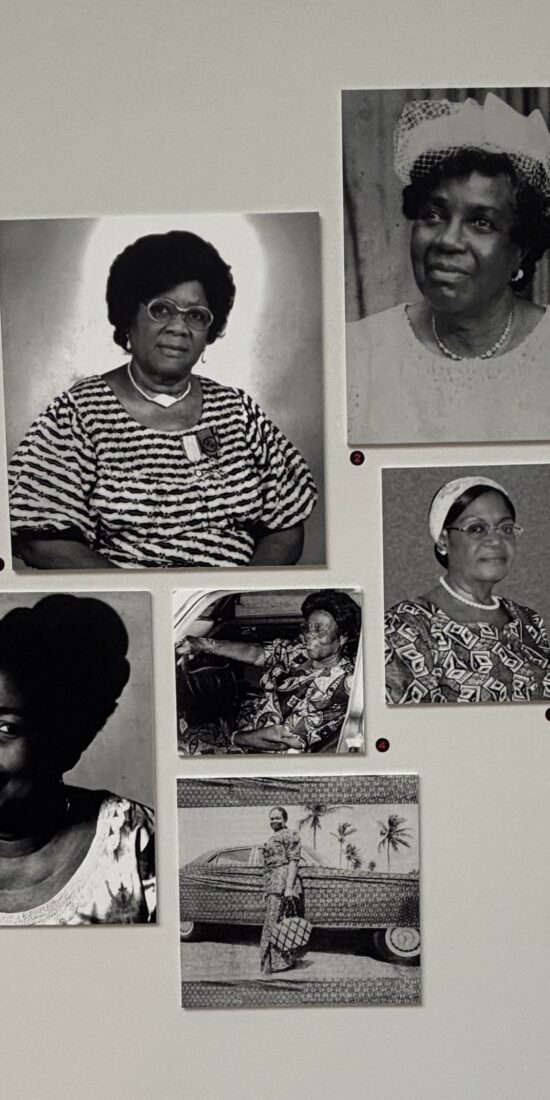
Wax print fabric — the bold, brightly coloured printed cotton that had become central to West and Central African fashion — was controlled, at the level of distribution, by women. Across the region, market women were the backbone of the fabric trade: buying from importers and manufacturers, selling to individual customers, setting local prices, and determining which designs reached which markets.
In Togo, this female commercial power reached its most spectacular expression in the Nana Benz — a group of women traders who, from the 1960s through the 1980s, controlled not just the local market but the entire West African wax print trade. Their story is so remarkable that it deserves its own article — which you can read here:
→ The Nana Benz of Togo: The Women Who Built an Empire from Wax Print
African Independence Fashion and the Diaspora
The fashion revolution of African independence did not stay in Africa. Through the 1960s, 70s, and 80s, it travelled with the African diaspora to Europe, North America, and the Caribbean — where it fused with local traditions to create new forms of cultural expression.
In the United States, the Black Arts Movement of the 1970s consciously embraced African aesthetics as part of a broader project of cultural reclamation. African fabric, African jewellery, natural hair, and garments inspired by West African traditions became markers of political identity and cultural pride. Fashion was politics.
In the United Kingdom, the Notting Hill Carnival — founded in 1966 as a celebration of Caribbean culture — became an annual showcase for African and Caribbean fashion at its most inventive and spectacular. The Carnival’s costumes drew on African beadwork, feathers, and fabric traditions while transforming them into something uniquely British-Caribbean.
In Brazil, communities that had maintained African spiritual traditions through centuries of slavery began to make these traditions more publicly visible — including the distinctive white garments of Candomblé, a religion of Yoruba origin. African aesthetics were becoming global aesthetics.
The Legacy: What the Independence Era Did for African Fashion
The fashion revolution of the African independence era had consequences that are still unfolding today. It established several foundational principles that continue to shape African fashion:
- African dress is a political act — choosing what to wear is choosing how to represent yourself and your culture
- African textiles are not raw materials for European designers — they are sophisticated, culturally loaded, and artistically complete in their own right
- Women are not just consumers of African fashion — they are its most important producers, traders, and gatekeepers
- Fashion travels — a garment can begin in West Africa and become a global symbol within a decade
- African aesthetics belong on the world stage — not as exoticism, but as equals
These are not small ideas. They are the foundation on which contemporary African fashion — the fashion weeks, the luxury brands, the global designers — has been built.
The independence era transformed African fashion from a colonial suppression zone into one of the world’s most dynamic creative spaces. The politicians who chose Kente over suits, the photographers who documented Bamako’s joyful modernity, the designers who took bogolan to Paris, the women who controlled the wax print trade — all of them were part of a single, extraordinary story.
Fashion was never just clothing. In the independence era, it was one of the most powerful tools that African people had for saying: we are here, we are beautiful, and we will dress as we choose.
Inspired by African fashion history? Explore our African-inspired art prints — original illustrations celebrating the beauty and heritage of African style.
Related reading: History of African Fashion | The Nana Benz of Togo | Nelson Mandela and the Madiba Shirt | La Sape et Sapologie