
The Nana Benz of Togo: The Women Who Built an Empire from Wax Print
Before anyone was talking about female entrepreneurship as a business school concept, a group of women in Lomé, Togo were running one of the most powerful commercial empires in West Africa.
They were called the Nana Benz. And the story of how they built their empire through fabric, through solidarity, through extraordinary commercial intelligence, and through a deep understanding of what people want to wear and why, is one of the most remarkable untold stories in the history of fashion and business.
This is their story.
Who Were the Nana Benz?
The Nana Benz were a group of Togolese businesswomen who, from the 1960s through the 1980s and into the 1990s, controlled the distribution of wax print fabric across West Africa. Based primarily at the Grand Marché de Lomé — the great market of Togo’s capital — they were not merely traders. They were the gatekeepers of an entire industry.
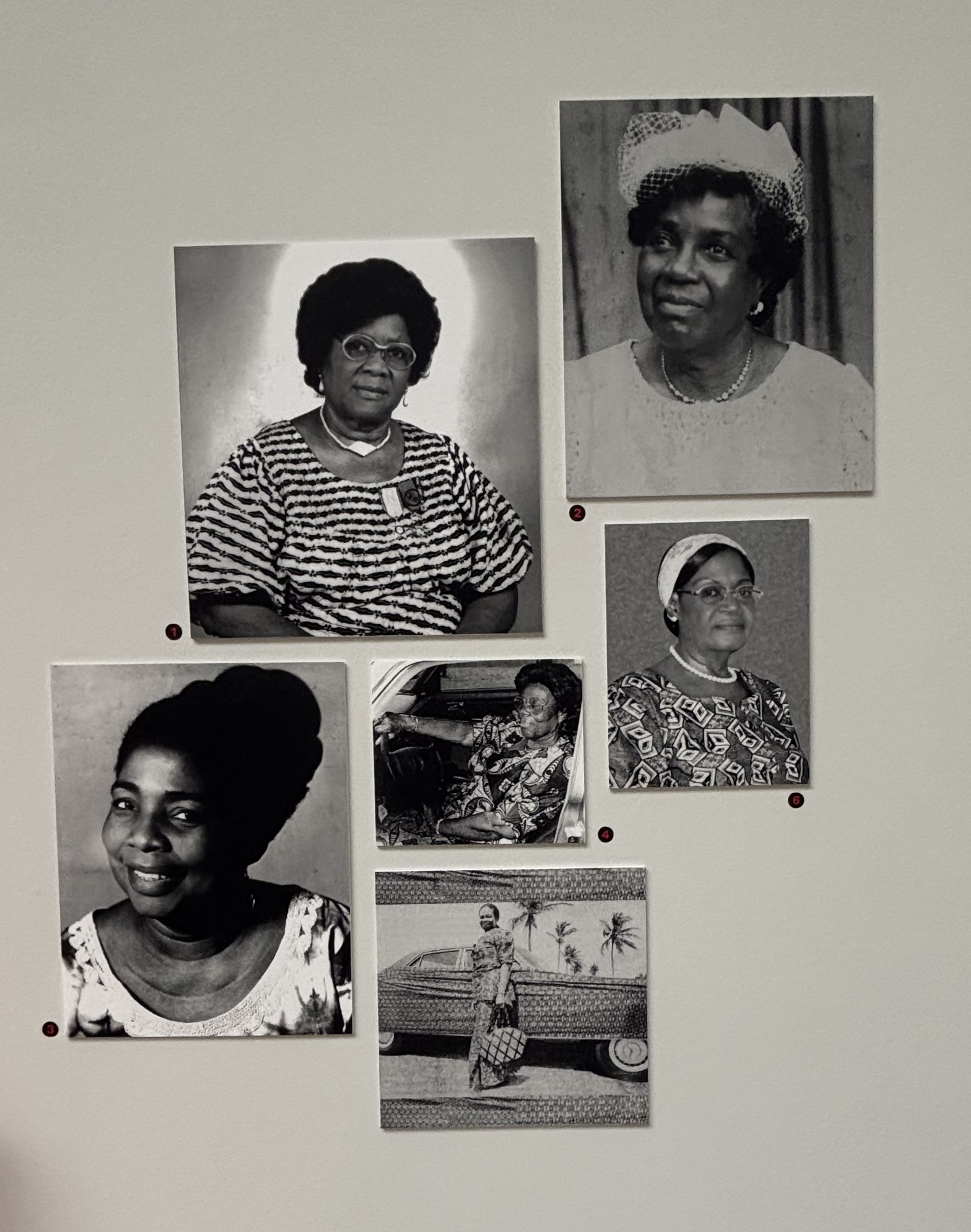
Their name is a story in itself. ‘Nana’ is a term of deep respect in several West African languages, roughly equivalent to ‘mother’ or ‘grandmother’ — a title given to women of authority and wisdom. ‘Benz’ refers to the Mercedes-Benz cars that these women drove as visible proof of their wealth. In a region where a Mercedes was an extraordinary status symbol, the sight of these women arriving at the market in gleaming cars announced their power to anyone who cared to look.
They were, in the truest sense, self-made. They had not inherited wealth or married into it. They had built it, through decades of commercial acumen, strategic relationships, and an intimate understanding of the most important textile in West African fashion.
The Fabric They Built Their Empire On: Wax Print
To understand the Nana Benz, you need to understand wax print — the bold, brightly coloured, wax-resist printed cotton fabric that is today one of the most recognisable textiles in the world, and that was, in the independence era, the most commercially important fabric in West and Central Africa.
Wax prints’ origins are layered with historical irony. The technique comes from batik, a traditional Indonesian textile art. In the 19th century, Dutch manufacturers industrialised the process and tried to sell it to the Indonesian market as a cheaper alternative to hand-made batik. The Indonesians largely rejected it. Dutch traders then brought it to West Africa — and there, something unexpected happened.
West Africans did not merely accept wax print. They transformed it. They demanded specific colours, specific patterns, specific scales of design suited to the way the fabric would actually be worn and draped. They gave each pattern a name, a story, a social meaning. They made it African — so thoroughly African that its Dutch origins are today largely forgotten.
By the time the Nana Benz rose to prominence in the 1960s, wax print was not an import. It was the fabric of celebration, of ceremony, of everyday elegance across the region. And the Nana Benz controlled it.
How the Nana Benz Built Their Power
The Structure of the Trade
The wax print trade of the 1960s and 70s was structured in a way that created an extraordinary opportunity for women with the right combination of capital, connections, and commercial intelligence.
At the top of the supply chain were the European manufacturers — primarily Dutch companies like Vlisco, and British firms like ABC Wax — who produced the fabric in their factories and needed distributors to bring it to African markets. Below them were the major wholesale distributors, who bought large quantities and then supplied regional traders. At the retail level were the market women — thousands of them across the region — who sold to individual customers.
The Nana Benz occupied the crucial middle position: exclusive wholesale distributors for the European manufacturers. Some secured exclusive rights to specific designs or colourways within particular markets. This gave them something invaluable: scarcity. If you wanted a specific wax print that a particular Nana Benz controlled, you had to go through her.
Exclusive Relationships and Market Control
The Nana Benz were brilliant at cultivating relationships with European manufacturers. They travelled to Europe — to Holland, to the UK — to meet with suppliers and negotiate terms. This was remarkable: in an era when international travel was expensive and complex, these women from Lomé were walking into boardrooms in Amsterdam and Manchester and negotiating deals as equals.
Their leverage was real. They understood the West African market far better than any European manufacturer ever could. They knew which colours sold, which patterns were in demand, and which designs carried positive or negative associations. They could make or break a new design by choosing to promote it or ignore it.
The manufacturers needed them. And the Nana Benz knew it.
Collective Strength and Solidarity
What made the Nana Benz particularly powerful was not just individual commercial success but collective organisation. They operated as a community — sharing information, supporting each other in difficult times, and presenting a united front to suppliers and competitors.
New entrants to the trade could be mentored by established Nana Benz, learning the rules and customs of the market. Disputes between members were often resolved internally. The network had its own codes of conduct, its own honour system, its own way of doing business that was distinct from both the European commercial world above and the retail market below.
This collective intelligence was one of their most important competitive advantages. No individual trader, however wealthy, could match the accumulated knowledge and network of the Nana Benz as a group.
The Naming Innovation: How the Nana Benz Made Wax Print African
One of the most significant — and most underappreciated — contributions of the Nana Benz was their role in naming wax print designs.
European manufacturers catalogued their designs with inventory numbers. Useful for their own records, but commercially inert. A number tells a customer nothing. A number creates no desire, no story, no emotional connection.
The Nana Benz changed this. They gave each design a name — and not dry, descriptive names, but vivid, culturally resonant, often humorous names that connected the fabric to the lives of the women who would wear it.
These names were far from random. They referenced current events, political figures, social dynamics, proverbs, and shared jokes. A design might be named after a prominent politician, after a popular saying, after a relationship dynamic that every woman recognised. The name made the fabric meaningful. It gave it a story. And a fabric with a story sells.
Some examples of how naming worked:
- A pattern of small interlocking rings might be named ‘jealousy’ — referencing the dynamic of co-wives in polygamous households
- A bold geometric print might be named after a prominent political figure, making it fashionable among his supporters
- A floral pattern might receive a name from a popular proverb, giving the wearer a way to communicate a message through her choice of fabric
This naming practice — invented by the Nana Benz as a commercial strategy — became one of the defining features of wax print culture across Africa. It is the reason that wax print fabrics have names at all. And it is the reason that choosing a wax print is never just a fashion decision: it is a cultural statement.
The manufacturers, recognising the value of this innovation, eventually began incorporating the names into their official catalogue, giving the Nana Benz’s cultural knowledge a kind of institutional recognition they had never sought and rarely received.
Wealth, Power, and Visibility
The wealth of the Nana Benz was extraordinary by any standard, and in the context of post-independence West Africa, where most people had very little, it was spectacular.
The Mercedes-Benz cars that gave them their name were the most visible expression of this wealth, but only the beginning. The Nana Benz invested in real estate, in their children’s education (often at the best schools in France or Germany), in philanthropy, and in the political relationships that protected their commercial interests.
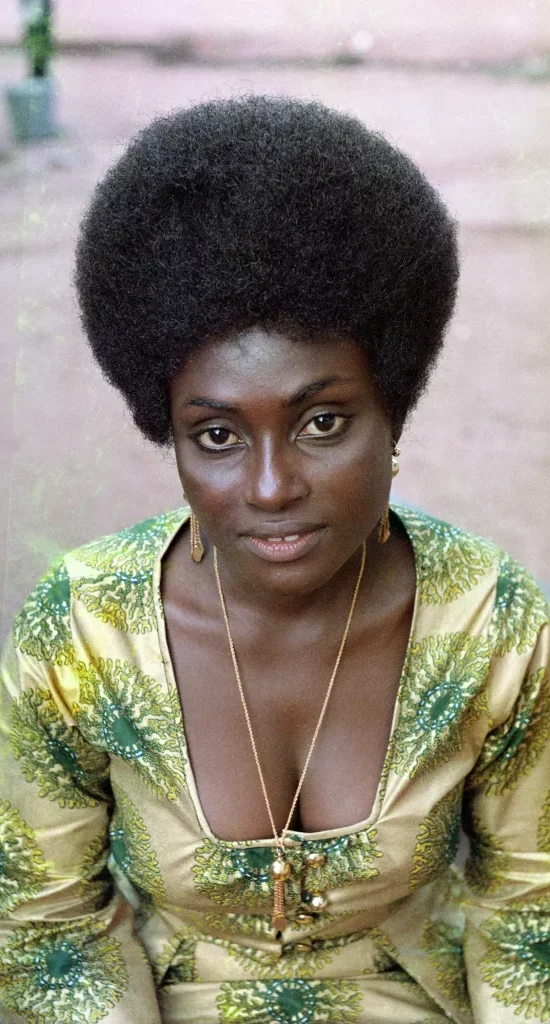
They were known for their personal style. A Nana Benz did not merely sell wax print; she wore it magnificently, as a living advertisement for the value of her merchandise. Their appearance at the Grand Marché de Lomé was an event: the quality of the fabric, the sophistication of the tailoring, the excellence of the head tie — all of it communicated mastery and authority.
Their political connections were equally important. In Togo under President Gnassingbé Eyadéma, who came to power in a military coup in 1967 and ruled the country for 38 years, the Nana Benz occupied a complex position. Some were close to the regime; all needed to manage their relationships with political power carefully. Their wealth made them both powerful and vulnerable — powerful enough to matter, wealthy enough to be noticed.
The Grand Marché de Lomé: The Heart of the Empire
The physical centre of the Nana Benz’s empire was the Grand Marché de Lomé — one of the great markets of West Africa. Stretching across several city blocks in the heart of Togo’s capital, the Grand Marché was (and remains) a place of extraordinary commercial energy: thousands of stalls, hundreds of thousands of products, and a noise and smell and colour that overwhelms the senses.
Within this vast market, the Nana Benz occupied prime positions. Their stalls were not modest affairs; they were substantial enterprises, sometimes occupying multiple units, staffed by employees, stocked with carefully curated selections of the finest wax prints from Europe.
The Grand Marché was not just a marketplace. It was an information exchange, a social network, a place where news about fashion trends, political developments, and commercial opportunities circulated with extraordinary speed. The Nana Benz were at the centre of this information network, and the information they gathered there was as valuable as the fabric they sold.
Women traders came from across the region — from Ghana, Côte d’Ivoire, Benin, Nigeria — to buy from the Nana Benz. Lomé’s position as a port city and as a relatively open trading environment (with lower tariffs than some neighbouring countries) made it the ideal hub for the regional wax print trade. And the Nana Benz made it their own.
The Decline: What Ended the Nana Benz Era
The golden era of the Nana Benz — roughly from the 1960s through the late 1980s — came to an end through a combination of forces that no amount of commercial intelligence could fully counter.
The Arrival of Cheaper Asian Imitations
From the late 1980s onwards, cheaper wax print imitations began flooding West African markets — produced primarily in China and later in other Asian manufacturing centres. These fabrics were significantly less expensive than the European originals that the Nana Benz controlled, and they were good enough for everyday use.
Price-sensitive customers began to choose the imitations. The premium that the Nana Benz had built their business on — the difference in price and quality between the European originals and everything else — began to erode. Their exclusive position was undermined not by competition from other African traders, but by globalisation.
Political and Economic Instability
Togo’s political turbulence in the 1990s — pro-democracy movements, strikes, and political violence — disrupted the commercial environment on which the Nana Benz depended. The Grand Marché suffered. Trade routes were disrupted. Some Nana Benz families moved capital out of the country or diversified into other businesses.
Changing Fashion Markets
The wax print market itself was changing. New generations of West African women were developing more diverse fashion tastes, engaging with global fashion trends, and sometimes choosing garments over fabric. The bolts-of-cloth model that the Nana Benz had dominated was giving way to a more complex, brand-oriented fashion landscape in which fabric alone was no longer the primary currency of style.
The Legacy of the Nana Benz
The Nana Benz may no longer control the wax print trade as they once did, but their legacy is embedded in African fashion in ways that are impossible to overstate.
The naming practice they invented is now universal — wax print designs across Africa are named, and those names are part of their cultural meaning and commercial value. Every time someone chooses a wax print based on its name, they are participating in a tradition that the Nana Benz created.
The Grand Marché de Lomé remains one of the great fabric markets of West Africa, and women traders remain central to it — carrying forward, in changed conditions, the commercial tradition that the Nana Benz established.
Most importantly, the Nana Benz demonstrated something of lasting significance: that women could be the architects of major economic systems, not just participants in them. They built their empire in an era when there were no business schools teaching female entrepreneurship, no venture capital firms offering funding, and no social media platforms celebrating their success. They built it from intelligence, from solidarity, from commercial audacity, and from a deep understanding of what cloth means to the people who wear it.
Their story is not a footnote in the history of African fashion. It is one of its central chapters.
Conclusion
The Nana Benz of Togo were, in the truest sense, pioneers. They pioneered a commercial model. They pioneered a cultural practice — the naming of wax prints — that transformed a foreign fabric into a genuinely African one. They pioneered a model of female economic power that had no precedent and left an enduring template.
When you see a woman in a beautifully draped wax print at a wedding in Lagos, or wrapped in a named fabric at a market in Accra, or wearing a bold Ankara print on a street in Paris — the Nana Benz are there, in the tradition that links that cloth to a name, that name to a story, and that story to the identity of the person wearing it.
That is not a small thing. That is everything that fashion is, at its deepest level.
Celebrating women who shaped African fashion? Explore our collection of African-inspired art prints, original illustrations that honour the beauty and complexity of African heritage.
Related reading: History of African Fashion | African Fashion and Independence | The Meaning of African Clothing